

Outbound campaigns book unqualified meetings when they're set up to produce meetings rather than customers. It usually comes down to six causes: nobody has written down what a qualified meeting is, the list is built from loose filters, the offer attracts curious people rather than buyers, the message is vague enough to mean anything, every reply gets a booking link, and the campaign is judged on how many meetings land in the calendar.
None of that is bad luck. Each cause is a decision made, or skipped, before the first email goes out. That's good news, because it means you can find the cause in your own campaign and change it.
We run outbound for Australian B2B service businesses and recruitment agencies, and fixing targeting and qualification is a big part of that work. The causes are the same whether you're running cold email, LinkedIn outreach or a hybrid of the two. Here's what we look at when a campaign is filling calendars with the wrong people.
What counts as an unqualified meeting?
An unqualified meeting is one where, by the end of the call, there was never a realistic path to a sale. It usually looks like one of these:
- Wrong company. Too small, wrong industry, wrong location, or locked into a competitor for years.
- Wrong person. Someone polite and interested who can't make or influence the decision.
- No problem to solve. They took the call because the topic sounded interesting, not because something needs fixing.
- Wrong expectations. They thought they were getting free advice, a partnership pitch or a chance to sell to you.
A meeting that doesn't close isn't automatically unqualified. A good-fit buyer with a real problem who isn't ready yet is a prospect on a longer timeline, and they need a different kind of follow-up (here's what to send a lead who says "not ready yet"). The test is fit and a real problem, not whether they bought on the first call.
The six causes of unqualified meetings
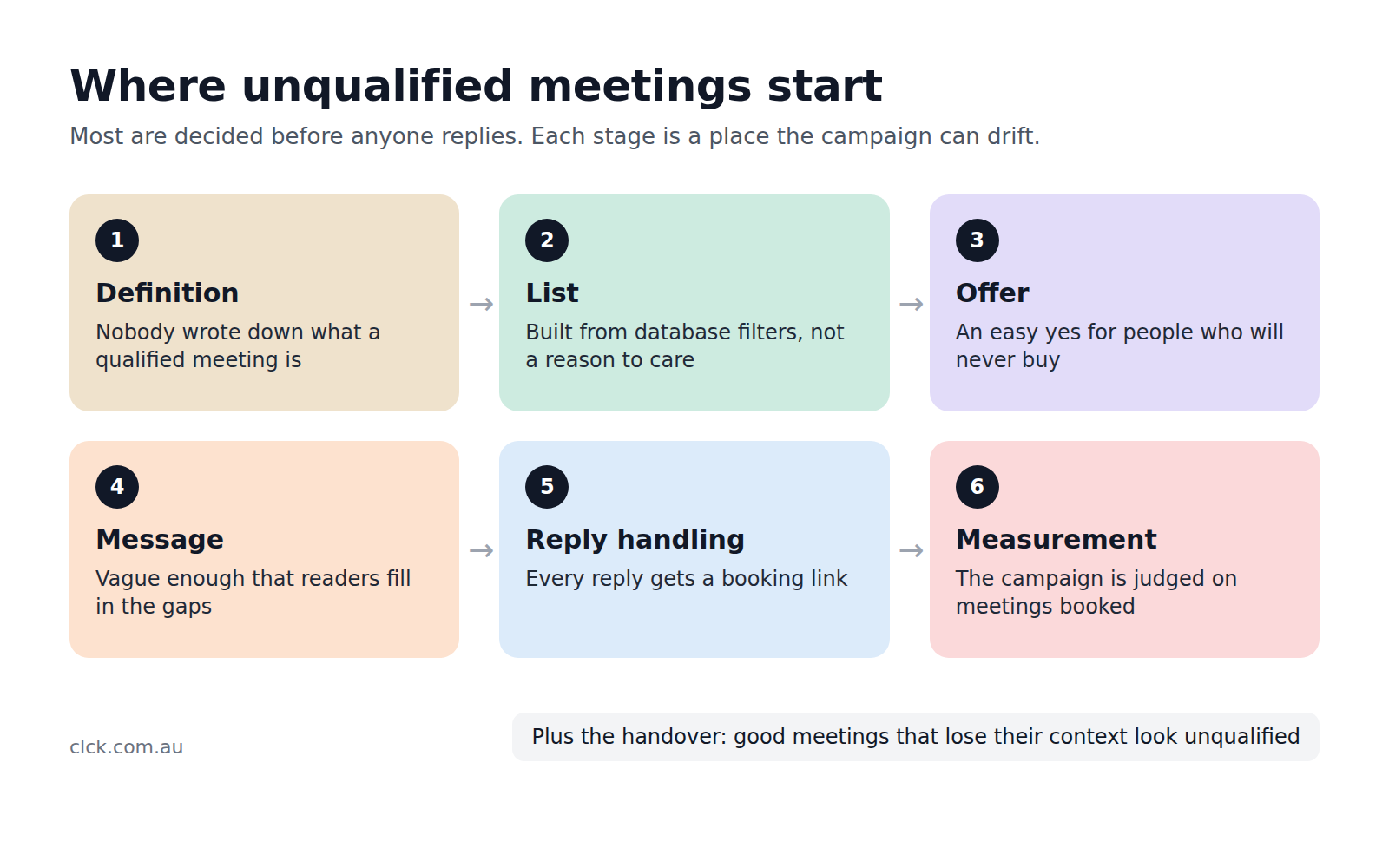
1. Nobody wrote down what a qualified meeting is
This sits underneath most of the other causes. If "qualified" lives in the founder's head, the people building the list, writing the emails and answering replies are all guessing. Each guess drifts a little wider, because a wider guess produces more meetings.
The definition doesn't need to be long. It needs the must-haves (company type, size, location and the role you need in the room), the problem that should be present, and the deal-breakers. If you can't fit it on one page, the campaign isn't ready to launch.
Here's a made-up example for an IT managed services provider:
- Company: 20 to 200 staff, based in Victoria or New South Wales, no internal IT team bigger than two people.
- Person: owner, managing director, COO or operations manager.
- Problem: their current provider is slow to respond, or they're planning a new office, a merger or a system change.
- Deal-breakers: fewer than 10 staff, locked into a contract for more than a year, or buying only through government tenders.
- Not now, but worth keeping: a good fit who's happy with their provider for the moment.
2. The list is built from filters, not fit
Most prospect lists start in a database: industry, headcount, job title, state. Those filters find companies that look like your customers on paper. They don't tell you whether a company has the problem you solve.
That's how you end up meeting a head of operations who has no budget for what you sell, or a business that already does it in-house. Data goes stale too. People change jobs, and a title that matched last year may not match now.
Fix it by giving each account a reason to be on the list, such as a hiring push, a new site or a change in their market, and by removing the people who shouldn't be there before launch: current customers, open deals, competitors, partners and anyone who has asked not to be contacted. In our B2B lead generation campaigns, current customers, open opportunities and do-not-contact records come out before anything is sent.
A smaller list of companies with a reason to care beats a big list of companies that only look right. One campaign we ran for a lead-management software business contacted 338 people rather than thousands of loosely matched names, and produced 15 booked meetings and four new clients within 40 days.
3. The offer attracts curious people, not buyers
The offer is what you're asking someone to say yes to. Some offers are an easy yes for people who will never buy: a free audit for anyone who asks, a gift card for taking a call, a "quick chat about growth".
The easier and more generic the yes, the more people take it for reasons that have nothing to do with buying. Paying people to attend is the extreme version, because you've given them a reason to turn up that isn't your service.
A better offer names the problem and the kind of business it's for. The right person can see why it's worth 20 minutes, and the wrong person can see straight away that it isn't for them. That self-selection is the cheapest qualification you'll get.
4. The message is vague enough to mean anything
Vague emails produce vague meetings. If your message could have come from any business in your category, the person who replies is often replying to their own idea of what you do. You find out on the call, which is the most expensive place to find out.
Shallow personalisation makes it worse. A compliment about someone's podcast earns curiosity about you, not interest in the problem. AI can adapt an approved message for different buyers, but a confident-sounding AI line can still be wrong about the business it's describing.
Say what you do, who it's for and what problem it fixes, in plain words. Name the kind of business you work with. If a reader can't tell from your email whether they're a fit, the email isn't finished.
5. Every reply gets a booking link
This is where a lot of campaigns lose control. A reply says "sounds interesting, tell me more", and someone sends a calendar link within minutes. Speed matters. But speed without reading the reply properly is how "tell me more" becomes a half-hour call with someone who was only browsing.
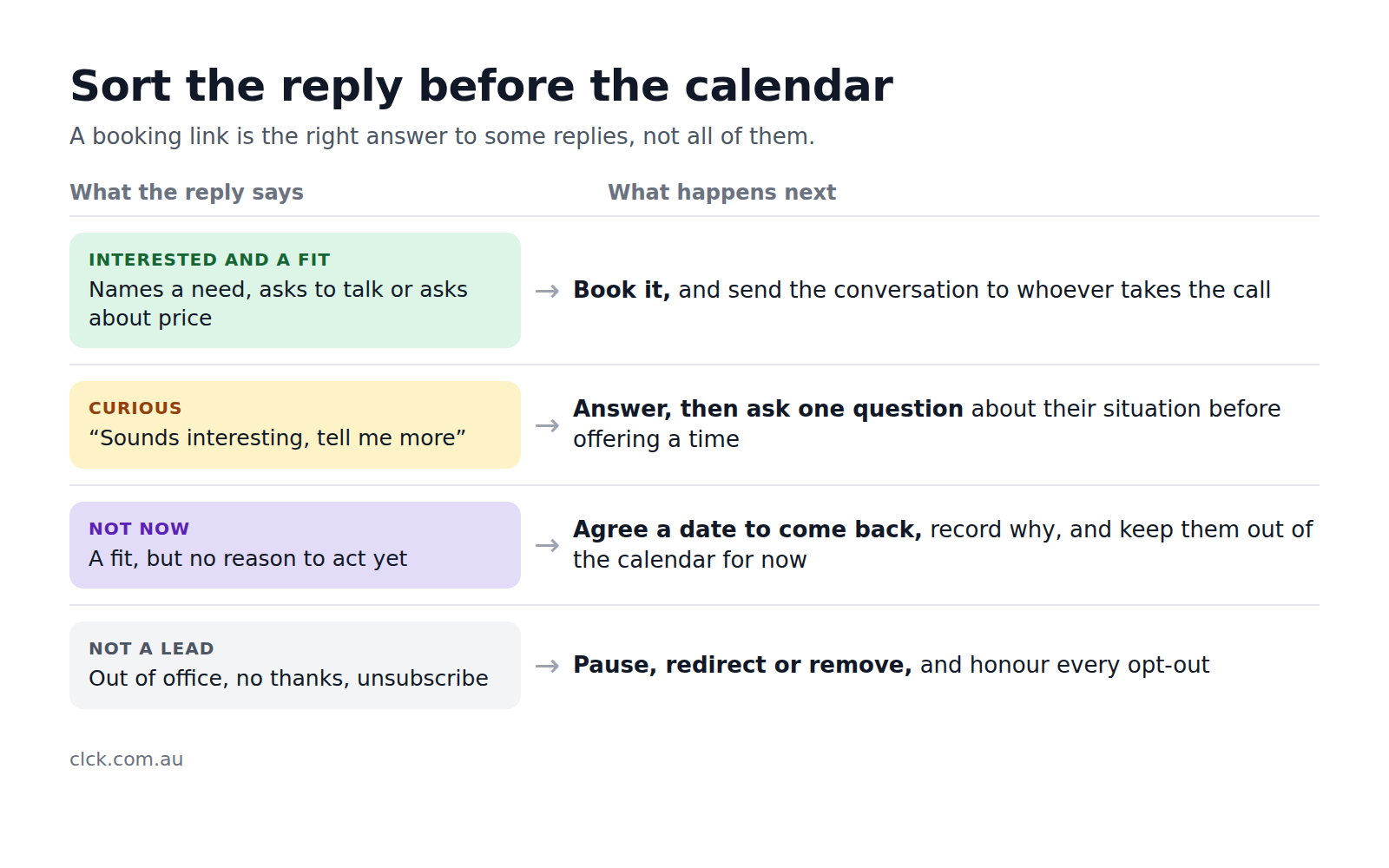
Sort replies before anything goes in the calendar. In our recruitment campaigns, we only count an employer as interested when a decision-maker asks to talk, asks about candidates or fees, or sends through a role. Out-of-office replies and "not now" don't count.
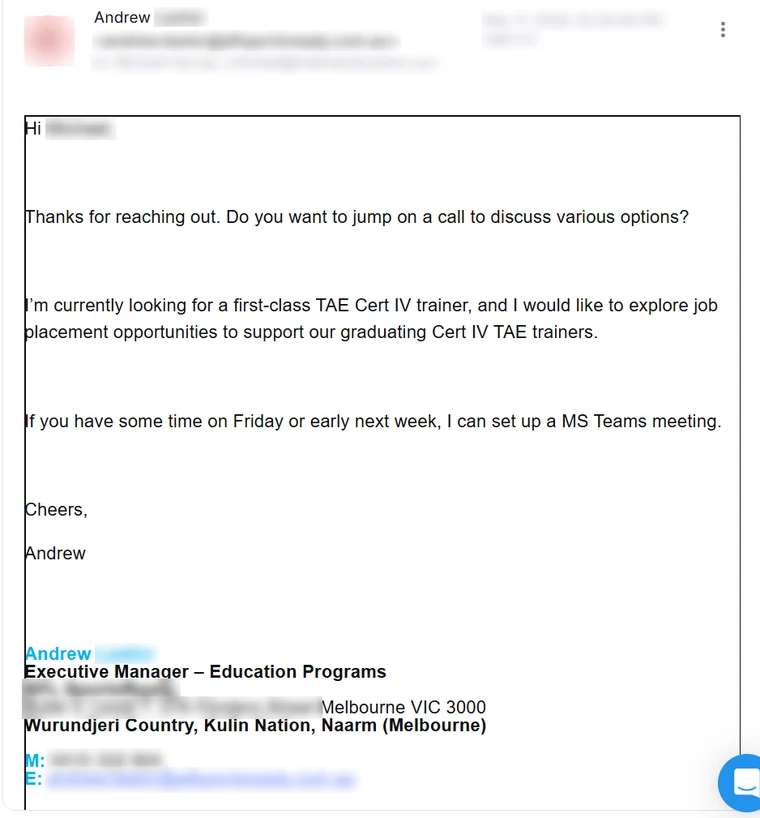
For Careers in Demand, an education and VET recruiter, the campaigns produced 96 interested employers plus 174 "not right now" replies (read the case study). Those 174 are worth going back to when the timing changes. Pushing them into meetings straight away would only have filled the calendar.
When a reply is unclear, ask one question before offering a time. Something like: "Is this something you're looking at this quarter, or more of a later thing?" A reply that names a problem and asks to talk can go straight to booking.
6. The campaign is judged on meetings booked
Whatever you count is what the campaign gets tuned towards. If the report leads with meetings booked, every lever quietly drifts towards more meetings: the list gets wider, the offer gets easier and the booking link goes out sooner. That's true for an in-house salesperson with a meeting target and for an outside provider paid per appointment.
Track each stage separately and judge the campaign on the later ones. We separate a contact, an interested reply, a booked meeting, a sales opportunity and a customer, and we don't roll them into one impressive total.
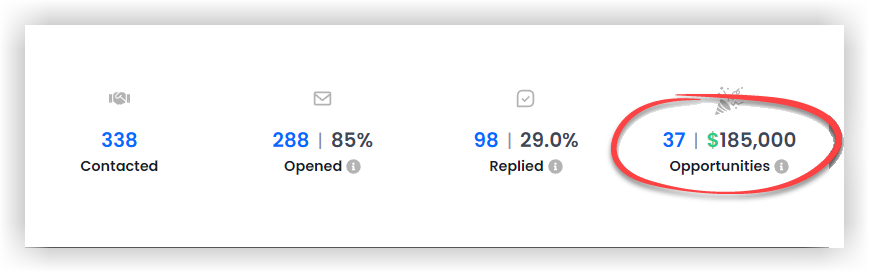
In that software campaign, 98 replies became 37 interested prospects, 15 meetings and four new clients. A report that said only "98 replies" or only "15 meetings" wouldn't have told you whether the campaign was working.
Sometimes the right next step isn't a meeting at all. For a commercial solar business, the next commercial step was a quote, and the campaign booked 11 quotes alongside 16 real opportunities in under three weeks. A generic meeting count would have missed that.
When good meetings look unqualified
Sometimes the meeting was fine and the handover wasn't. The salesperson walks in without the original email, the reply or the reason the prospect agreed to talk. They run a generic discovery call, the prospect feels like they're starting from scratch, and the meeting gets logged as "not qualified".
Pass the context along with the meeting: which message they replied to, what they said, why they fit and what they're expecting from the call. Then get back to them fast. An interested reply that waits days often goes cold.
In our recruitment campaigns, we don't book meetings by default. Every interested employer goes straight to the agency's own team, who qualify and meet them. The person who'll win the work is the one deciding whether the meeting is worth having.
If replies and next steps keep falling between inboxes and the CRM, fix that before you add volume. Our guide on when to fix HubSpot before scaling lead generation walks through the warning signs.
How to diagnose your own campaign
You don't need a big audit. Take your last 20 outbound meetings, or all of them if you've had fewer, and tag each one with the main reason it did or didn't go anywhere. Then look for the pattern.
| What you saw on the call | Likely cause | Where to look first |
|---|---|---|
| Company too small, wrong industry or wrong location | Loose list filters | Targeting rules and exclusions |
| Right company, wrong person | Role targeting | Job titles, and who has signed off on similar work before |
| Right person, no real problem | Generic offer or message | The offer and the first email |
| They expected something else | Vague copy or an incentive | What the email promised |
| Booked from "tell me more" | No reply qualification | Who sends the booking link, and when |
| Good fit, but not for a year | Timing, not quality | Follow-up and nurture, not targeting |
| Good fit, but it felt like a cold call | Handover lost the context | Reply notes and the CRM handover |
Two patterns tell you the most. If most bad meetings fail on company or person, the problem is upstream in the list. If most fail on problem or expectations, look at the offer and the message. Either way, ask the person who ran the meetings as well as the person who booked them.
What to change first
Work through these in order. Each step makes the next one easier, and all of them cost less than sending more volume.
- Write a one-page qualified meeting definition. Must-haves, deal-breakers, the problem that should be present and who needs to be on the call. Get sales and whoever runs outbound to agree on it.
- Rebuild the list from fit. Keep the filters, add a reason to contact each account, and apply your exclusions before launch.
- Make the offer specific. Name the problem and the kind of business it's for, so the wrong people can rule themselves out.
- Rewrite the first email in plain words. What you do, who it's for and one easy question to answer.
- Qualify in the reply, before the calendar. Agree what counts as interested, and ask one question when a reply is unclear.
- Report each stage separately. Contacts, interested replies, meetings, opportunities and customers. Judge the campaign on the last two.
- Hand over with context, and close the loop. Send the conversation with the meeting, call back the same day where you can, and feed what happens on the call back into the targeting.
Expect the meeting count to dip when you tighten things up. That's usually the point. Fewer, better meetings give your team time to prepare and follow up properly, so watch opportunities and customers rather than the calendar.
Frequently asked questions
What is a qualified meeting in outbound lead generation?
A meeting with someone at a company that fits your target market, who has the problem you solve, can make or influence the decision, and has agreed to talk about that problem. Timing can come later. Fit and a real problem can't be missing.
Is BANT still worth using for outbound meetings?
BANT (budget, authority, need and timing) is a fair checklist for the sales call itself. Before booking, it's too much to ask a stranger who has just replied to an email. Check fit and need from your research and their reply, and leave budget and timing for the conversation.
How many questions should we ask before booking a meeting?
Usually one, and only when the reply doesn't make fit or interest obvious. Each extra question gives a busy person another reason not to answer.
Does paying per meeting cause unqualified meetings?
It can. Any target based on meeting count pulls a campaign towards more meetings. If you pay or reward on meetings, agree in writing what counts as qualified, and what happens when a meeting doesn't meet that definition.
Can AI fix lead quality?
AI can research companies, sort lists and adapt an approved message for different buyers. It can't decide who your best customers are, and it will reach more of the wrong people faster if the definition and offer are weak. Our AI prospecting playbook covers what to set up first.
Next step
If your calendar is full of the wrong meetings, start with your last 20 and the table above. If you'd like a second opinion on your targeting, offer and reply handling, book a strategy session. We'll look at where your campaign is losing quality and whether the fix is the list, the message, the handover or the CRM behind it.