

A role you'd be perfect for goes up on SEEK. By lunchtime the hiring manager has heard from five agencies, and you're competing on speed and fees for work you could have had to yourself a month earlier.
The agencies that win the best roles in a niche usually got there first. They were already talking to the hiring manager, so when a seat went empty, they were the ones who got the call.
The short answer: niche recruiters get in front of hiring managers early by picking a defined list of employers, staying visible to them on LinkedIn, asking past clients and placed candidates for introductions, and contacting the rest directly by email or phone with a short, relevant note. The work that matters most is doing it every week, including the busy ones.
This guide covers each of those, with the trade-offs, and when it makes sense to hand part of the work to someone else. It's based on what we see running employer outreach for Australian recruitment agencies.
Why being first matters
A role usually starts well before the job ad. Someone resigns, a contract is won or a team grows. The manager starts planning the hire, and often the first thing they do is ask around: their own network, a colleague, a recruiter they already know. The ad often comes later, once those quicker options haven't worked.
The ABS points to this too. Its job vacancy figures include roles filled only through word of mouth or social media, which never appear on a job board at all.
So the ad is a late signal. By the time you see it, the manager has had the role on their mind for weeks, and every agency in your niche can see it at the same moment you do.
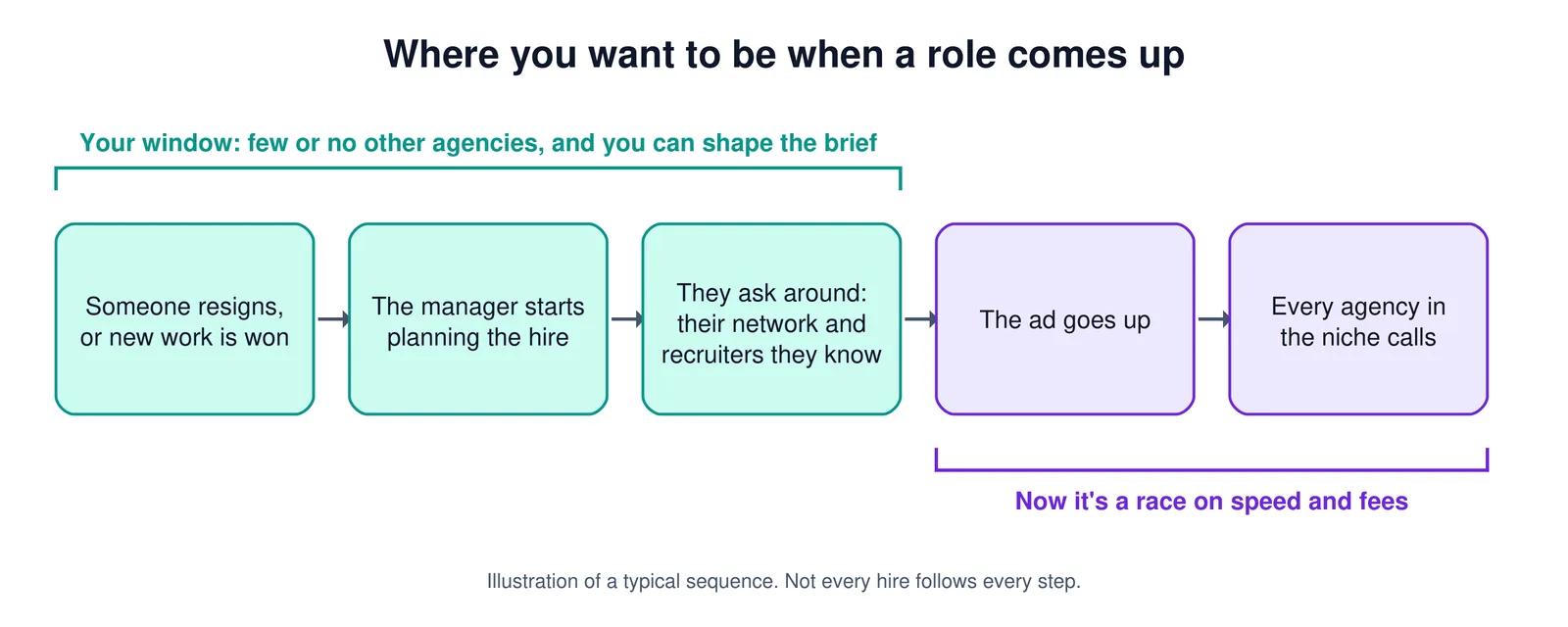
Getting there first changes the conversation. There's no one else in it. You can help shape the brief, the title and the salary before they're set. You have time to agree terms before the manager is choosing between agencies on price. And if you fill the role well, you're the first call next time.
The hidden market: most employers aren't hiring today
Think of your market as an iceberg. The tip is the employers who are hiring right now. That's what job boards show you, and it's where most agencies spend their business development time.
The tip is small. Only a small share of employers are hiring at any one time. For the specific roles you fill, the share hiring right now is smaller again.
The rest of the iceberg is the employers who aren't hiring yet. They'll hire again. Hardly anyone talks to them before they do.
That's the group to build your pipeline from. An employer who says "not now, but keep in touch" is telling you they expect to hire again and are happy to hear from you. Write their name down, note when to check back, and get back to them when you said you would.
Why this is hard for a small agency
If your new clients mostly come from referrals and word of mouth, you'll know the pattern. One big month. Then a slow month while you hunt for the next one.
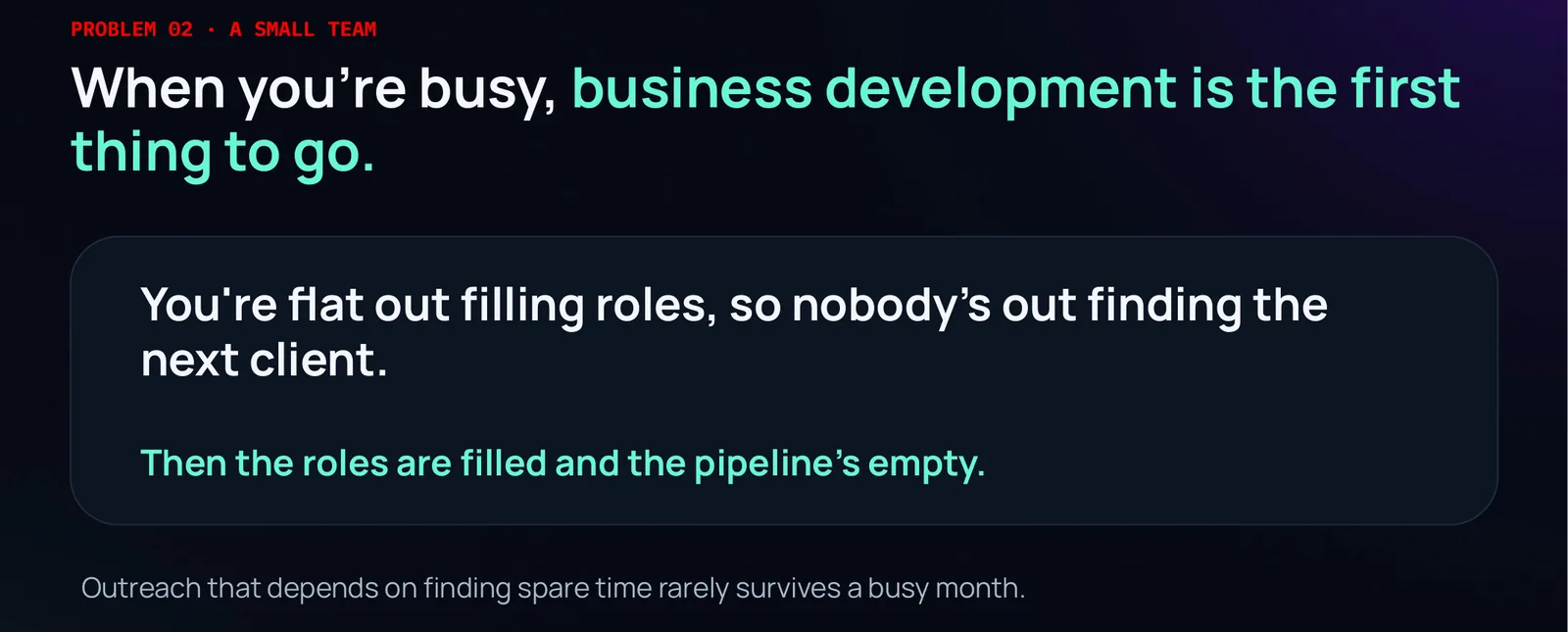
It happens because the people who bill are usually the people who do the business development. When roles are live, you're flat out filling them and nobody's out finding the next client. Then the roles are filled and the pipeline is empty.
That shapes everything below. Whichever channels you choose, pick ones you can keep doing in your busiest month. Outreach that depends on spare time rarely survives one.
The channels you can run yourself
There are five channels most niche recruiters can run without outside help. Each one has a cost in time, and each one reaches hiring managers in a different way.
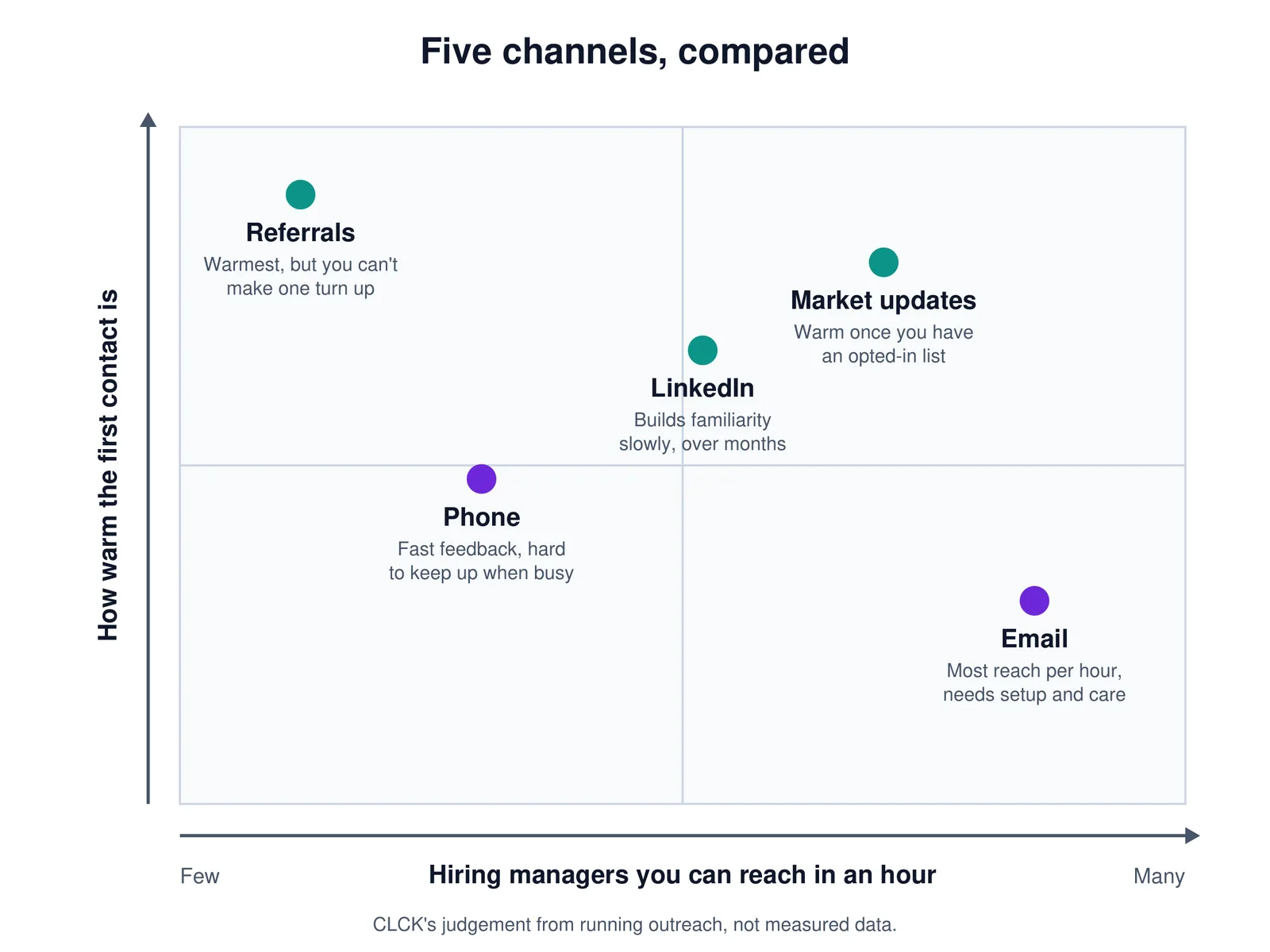
LinkedIn is where hiring managers can see who you are before you ever contact them. Write your profile for the employers you want to work with: what roles you fill, for which kind of business, and in which locations. Connect with hiring managers in your niche. Post about what you're seeing in the market, such as where salaries are moving or which roles are hardest to fill right now. Comment on posts from the people on your target list.
The trade-off is time. LinkedIn builds familiarity over months, and a pitch in a direct message from a stranger is easy to ignore. It works best as the thing that makes your other outreach land: when your email arrives, the manager has already seen your name. We compare it with email in more detail in LinkedIn vs cold email for B2B service businesses.
Referrals and past clients
Your warmest introductions come from people who've already worked with you. Think of past clients who've moved to a new company, and candidates you placed who now hire people themselves.
Ask directly, and make it easy: name the kind of business you'd like an introduction to. Keep an eye on job changes among your past contacts, because a client who moves company often brings their recruiter with them.
The trade-off is control. You can't make a referral turn up when you need one, and you can't build a pipeline on them alone.
Market updates
A short monthly note on your niche gives hiring managers a reason to hear from you when they aren't hiring. Cover what's moving in salaries and which skills are hard to find. Keep it to a few points they can read in two minutes.
Send it to people who've agreed to get it. Australia's Spam Act requires consent for marketing emails, and the ACMA's guidance is plain about that. The easiest way to build the list is in conversation: "I send a short monthly update on the market for [roles]. Want me to add you?"
The trade-off is that it takes months to build a list worth sending to. Once you have one, it keeps you front of mind with people who already know you.
Phone
The phone still works in plenty of niches, and you get feedback straight away. A two-minute call can tell you more about an employer's plans than a month of emails.
The trade-off is that it's the hardest channel to keep doing when you're busy. Most calls end in voicemail or a gatekeeper, and plenty of agency owners simply don't enjoy cold calling. It works best with people who already know your name: a past client, someone who replied to an email, or a referral.
Email reaches the most hiring managers for the time you put in. Done well, it reads like a quick note from someone who knows their industry, and the manager can reply when it suits them.
The trade-offs are real. It needs a good list, some technical setup so your emails land in inboxes, and someone who replies quickly when a manager responds. Each email has to identify you and include an easy way to unsubscribe, and you need to be comfortable with the ACMA's consent rules. Done badly, it can damage your domain and your agency's reputation in a small niche. Treat it as one channel in the mix.
How to pick the employers to target
Most outreach fails before a word is written, because the list is wrong. A smaller list of the right employers beats a long list of anyone who might hire.
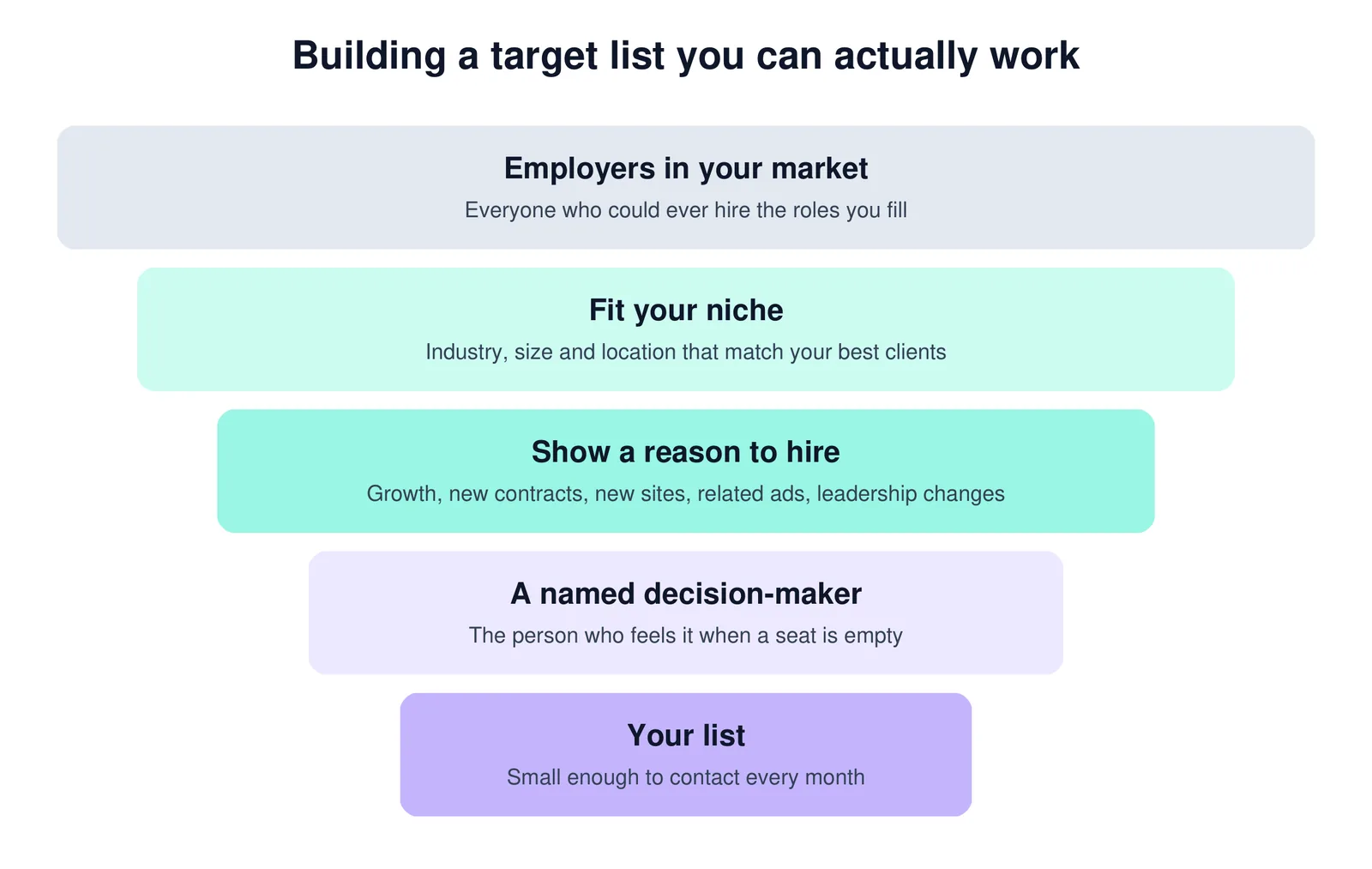
Start with your best clients. Look at who has paid your full fee, hired more than once and been good to work with. What do they have in common? Industry, size, location and the roles they hire are usually enough to describe your niche.
Then look for reasons an employer will hire soon. A new contract or tender win. A new site or office. Growth on their own website or LinkedIn. Ads for related roles, which often mean a team is expanding. A new leader, who tends to rebuild their team.
Find the person who feels it when a seat is empty. In a small business that's often the owner or a director. In a larger one it's usually the operations manager or head of the department, not always HR.
Employers already advertising for the roles you fill are worth contacting too. They have a live need, so put them first in the queue. Just expect more competition there.
Finally, keep the list to a size you can contact every month. If it's too long to keep up with, the employers at the bottom never hear from you.
What to say
The message that gets a reply is about their world. The hiring manager doesn't need your agency's history. They need to know you understand the roles they hire for and that replying will be easy.
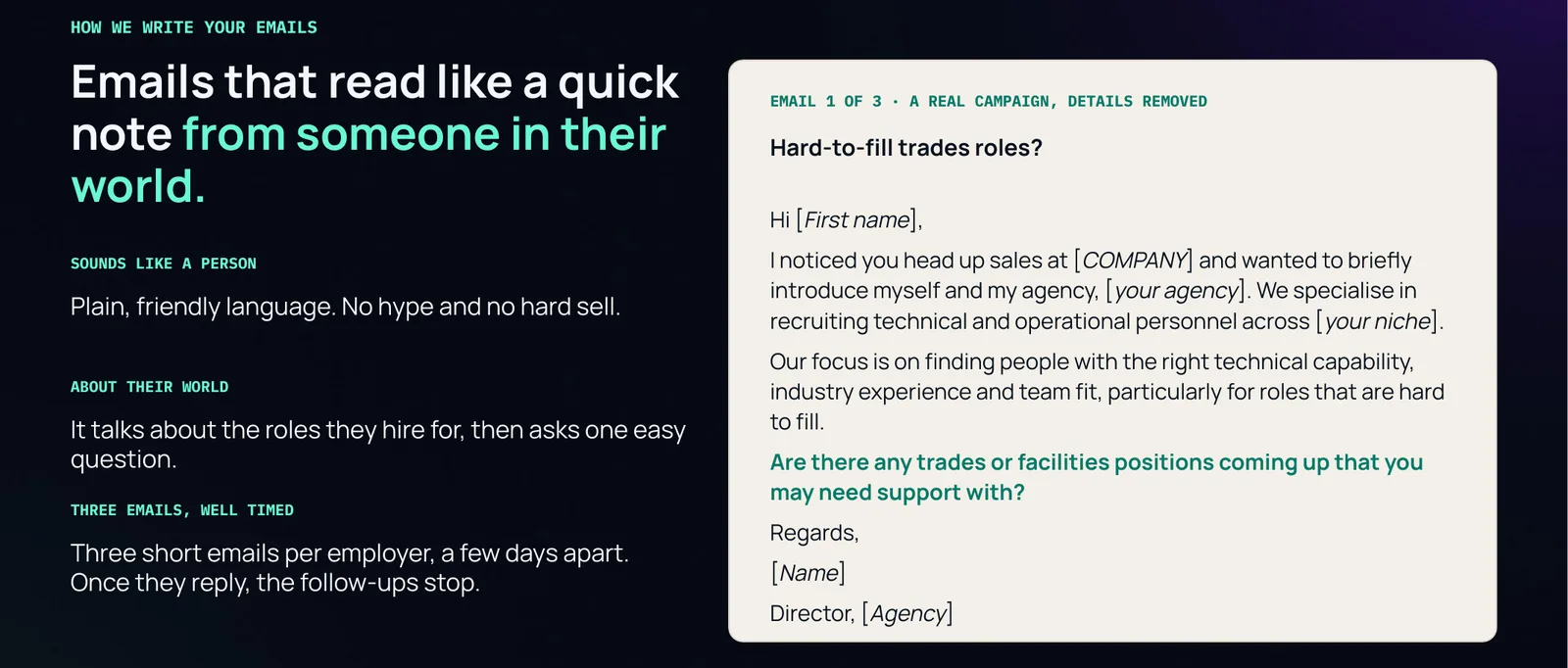
A few things we've learned from writing these emails for recruitment clients:
- Keep it short enough to read on a phone in one go.
- Name the roles you fill and the kind of business you fill them for.
- Ask one easy question, such as whether any roles like that are coming up.
- Write the way you'd talk to them at an industry event.
- Follow up a couple of times, a few days apart, and stop as soon as they reply.
Here's the core of an email from one of our campaigns, with the details removed:
I noticed you head up sales at [Company] and wanted to briefly introduce myself and my agency. We specialise in recruiting technical and operational personnel across [niche]. Are there any trades or facilities positions coming up that you may need support with?
When a manager replies, call or email back the same day. Ask about the role, the timing and what's made it hard to fill. If they say "not now", ask when it's worth checking back and put it in your diary.
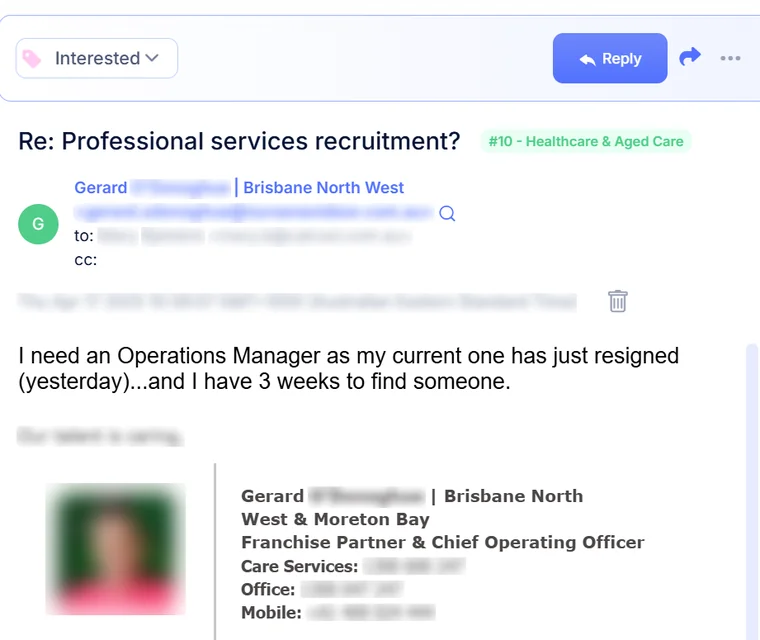
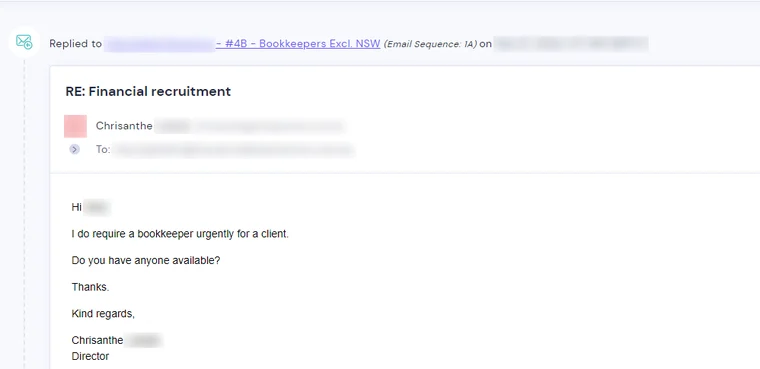
Here's what it looks like when a message reaches the right person at the right time. These are real replies to campaigns we've run for recruitment clients, with names blurred.
Keep it running in busy months
The agencies that get in early tend to do the same few things every week, whatever's happening on their desk.
Block a regular slot for business development and protect it the way you'd protect a client meeting. Keep your target list, your "not now" employers and their check-back dates in one place, whether that's a CRM or a spreadsheet. Post on LinkedIn on a set day. Send your market update on the same date each month.
If you're the main biller, be honest about what you can keep up. One channel done every week will do more for you than four channels done in quiet months.
When outsourcing makes sense
Some agencies handle all of this themselves and do it well. Outsourcing part of it makes sense when:
- you're the main biller and the main business developer, and the business development keeps slipping;
- your pipeline runs feast or famine, and referrals alone don't fill the gaps;
- you've got a niche you can describe in a sentence, and someone who can call interested employers back the same day.
It doesn't make sense if your niche isn't defined yet, if nobody has time to follow up on replies, or if referrals already keep your desk full.
If you look at outside help, ask some direct questions. Will the outreach go out in your agency's name? Do you approve the employers and the messages? What counts as a result, and is there a guarantee behind it? Who handles the replies?
This is the part we do. We run employer outreach for Australian recruitment and staffing agencies, with every email sent in your agency's name. You approve the audience and the messages. When a hiring manager is interested, it comes straight to you, and you qualify, meet and win the client.
We guarantee 20 interested employers in your first 90 days, or we work for free until you hit that target. "Interested" means a decision-maker at a target employer asks to talk, asks about candidates or fees, or sends you a role. Employers who say "not now, but keep in touch" don't count toward the 20. They still go in your lead sheet as future pipeline.
Across four 2026 campaigns, one recruitment client has had 96 interested employers. Another recruitment firm signed 6 new clients in 15 days from 20 positive replies, and 10 in total.
"Within the first month of our first campaign, I started securing clients."
You'll get your exact price on the planning call. It's three months to start, then month to month.