
Most sales problems don’t look dramatic from the outside. You have a good conversation, the person is interested, and there’s a clear reason to keep talking. Then timing gets a bit messy, a proposal takes longer than expected, or the buyer needs to come back after speaking to someone else.
That is where a lot of sales momentum disappears. Not because the lead was bad, and not because anyone was careless. It usually happens because long buying cycles are hard to manage when the context is spread across your CRM, inbox, calendar, call notes, proposals and a few things someone is trying to remember.
This is the part of sales where I think AI agents are genuinely useful. Not as a way to replace salespeople, and not as another excuse to send more generic outreach. Used properly, they can help maintain context and momentum through the messy middle of the sales process.
That is how I’m starting to use them inside CLCK. It’s not perfect, it’s not fully automated, and I still review the important steps. But it is already changing the way I think about follow-up, warm lead reactivation, proposals and meeting preparation.
The problem is not always more leads
Most growth conversations start with lead generation. That makes sense if there are not enough sales conversations happening, but it is not always the first problem to solve. Often, the better first move is fixing the CRM and follow-up rhythm before adding more activity. A lot of businesses already have people in the system who have shown interest, asked for pricing, had a meeting, gone quiet, or said something like “come back to me later”.
The issue is that these opportunities do not always stay visible. The CRM might technically hold the information, but that does not mean the right person is prompted at the right time. The calendar shows the meeting happened, but not whether the follow-up was sent. The inbox has the trail, but someone still has to read it, understand it and decide what should happen next.
In a small team, the owner or sales lead often becomes the memory of the business. They remember who was interested, who needed a proposal, who had a timing issue, who needed a softer approach and who should be checked in with next month. That can work for a while, but it starts to break when the number of conversations increases or delivery gets busy.
This is why I’m more interested in AI agents as a context and follow-up layer than as a prospecting gimmick. If your buying cycle is long, the value is often in keeping the right opportunities warm and moving, not just creating more new ones.
The common mistake with AI in sales
A lot of AI sales content still talks about the very top of the funnel. Write more cold emails, personalise more LinkedIn messages, generate more variations, scrape more accounts and push more people into a sequence. There is a place for better outreach, but that is only one part of a sales system.
If AI is only being used to write first-touch messages faster, it can just make the process noisier. You might send more emails and still miss the warm lead who was ready for a follow-up. You might improve your opening message and still leave an old opportunity untouched for three months. You might have a clever outreach workflow and still forget to send the proposal after a good call.
For long buying cycles, the bigger opportunity is continuity. The useful question is not only “how do we reach more people?” It is also “how do we make sure the people who already showed interest do not disappear from view?”
That is a less exciting story than “AI will replace your sales team”, but it is much more practical. Most teams do not need more hype. They need a better way to keep track of what has happened, what matters, and what should happen next.
What AI agents are actually useful for in sales ops
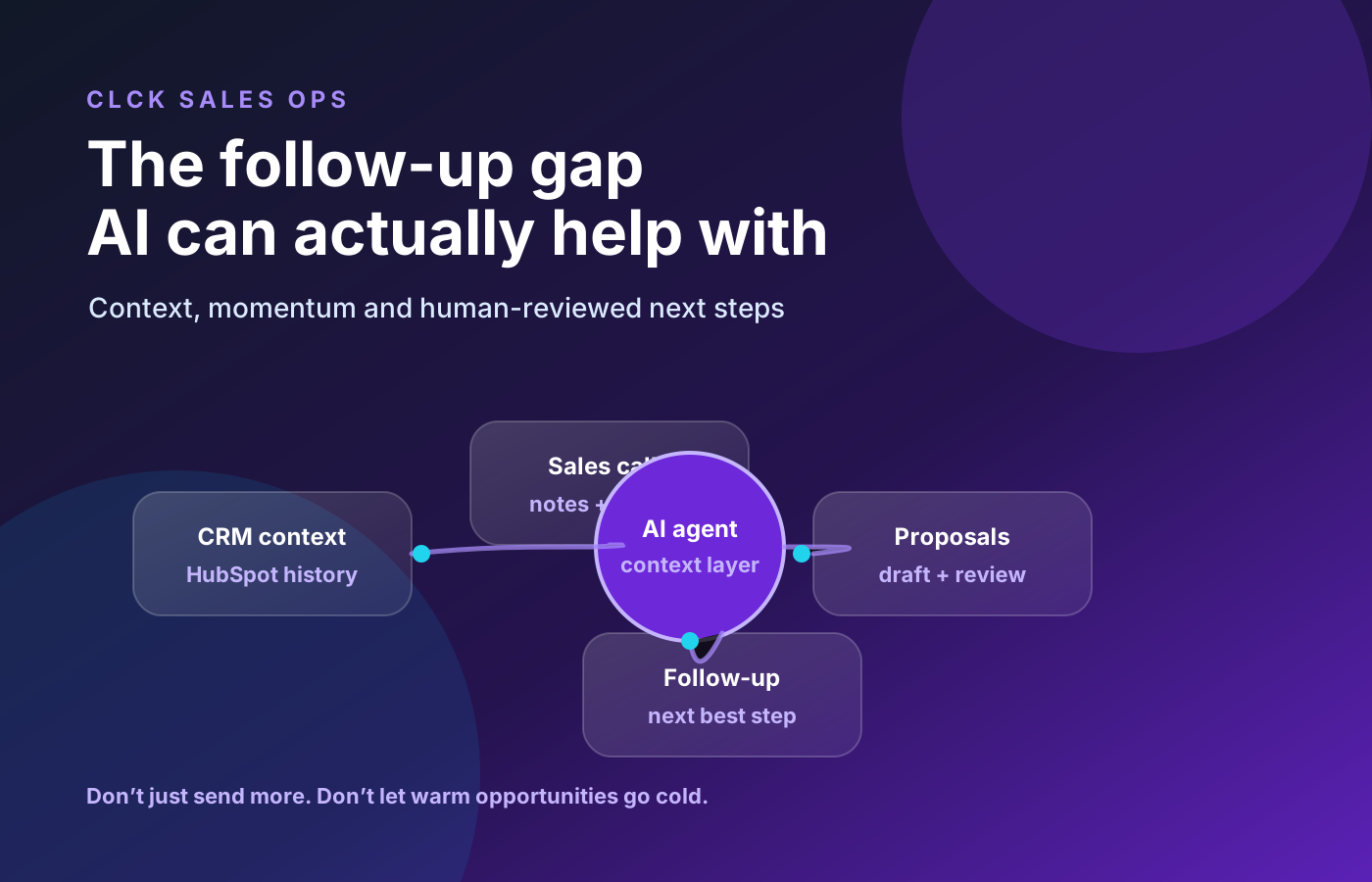
A good way to think about AI agents is that they can sit between your sales systems and your judgement. Your CRM holds the contact and deal history. Your inbox and calendar show recent activity. Your notes and transcripts hold the nuance. Your outreach tools show who has replied and who is waiting.
The agent can help pull those pieces together and turn them into something usable. It can summarise what matters, identify likely gaps, draft the next step and bring neglected opportunities back to the surface. That does not mean it should make every decision or send every message on its own.
The useful model is human-reviewed automation. The agent does the digging and first draft work. The human decides whether the action makes sense, whether the tone is right, and whether the timing is appropriate.
That split is important because sales context is messy. There are relationship details, pricing decisions, timing issues and judgement calls that should not be handed over blindly. But there is also a lot of repetitive context-gathering, which is where AI agents can save real time without taking the human out of the decision.
Reactivating old warm leads from HubSpot
One of the first places I’ve been using this is warm lead reactivation. In HubSpot, we have a dynamic list of sales-qualified leads, opportunities and customers with no activity for 90 days. There are roughly 500 older leads and clients in that bucket, which is exactly the kind of list that can quietly sit there if nobody builds a rhythm around it.
I currently ask Hermes, our internal AI agent setup, to process around 20 records at a time. It could be automated further, but for now I prefer the manual trigger because it keeps me close to the quality and makes the workflow easier to refine. For each record, the agent reviews recent contact history, old deals and previous interactions, then writes a short reactivation note into a custom HubSpot property.
That note can then be inserted into a HubSpot sequence email. The sequence handles the templated follow-up, but the first message has a better starting point because it is informed by the actual relationship history. It is not just “checking in” with no context.
I still review every lead before enrolling them. That review step is non-negotiable because not every old lead should be contacted, and not every relationship should be treated the same way. The value is that I can make that decision faster, with the relevant context already brought back into view.
Checking for missed follow-up after sales calls
Another useful workflow is checking for missed sales follow-up. This is one of those problems that sounds simple until you look at a real week. You might have a discovery call, a client meeting, a proposal to finish, a delivery issue to review and a few internal conversations that all need attention on the same day.
In that kind of week, it is easy for a good sales conversation to lose momentum. The follow-up is not intentionally ignored. It just gets pushed behind something urgent, then the context gets a bit colder and the next step takes longer than it should.
I use AI agents to review recent calendar and email activity, then look for likely sales calls where no follow-up appears to have been sent. The agent can flag a call that looks like a sales meeting, a proposal that may have been discussed but not sent, or a prospect who was promised a next step and has not received it yet.
It will not be right every time, and I do not expect it to be. The point is to have another layer checking for open loops. Once something is flagged, I can review it and ask the agent to draft the follow-up email, proposal note or next-step message if needed.
Drafting proposals from real sales context
Proposal creation is one of the areas where AI can be useful or completely unhelpful, depending on the inputs. A generic proposal draft is usually not worth much. It can sound polished, but it often misses the actual pain points, the real buying context and the commercial judgement that should shape the recommendation.
The better workflow is to give the agent the same material I would use to write the proposal myself. That might include call notes, transcripts, CRM context, deal history, background notes, known problems and any thoughts about pricing strategy. With that context, the agent can produce a much stronger first draft.
The draft can organise the problem, summarise the buyer’s priorities, outline the recommended approach and turn scattered notes into a coherent proposal. It can also draft the email that sends the proposal, which saves another small but useful chunk of time.
I still review and edit the proposal before it goes anywhere. That is where the real strategy sits. The agent can reduce the blank page and help structure the thinking, but I still need to decide whether the offer is right, whether the pricing makes sense, and whether the proposal reflects the conversation properly.
Monitoring outreach replies
Outbound activity creates another follow-up challenge because replies do not always land in the same place. Some campaigns are running through tools like Instantly or Waalaxy, and those platforms can end up holding important replies that are separate from the main inbox or CRM rhythm.
An AI agent can monitor those platforms and flag people who appear to be waiting for a reply. It can also suggest a response for me to review. That is useful because the cost of missing a warm reply is high, especially when someone has taken the time to ask a real question or show interest.
The goal is not to let AI run the conversation by itself. It is to reduce the chance that a real buying signal gets buried in a tool that only gets checked when someone remembers. That is a very practical problem, and it is exactly the kind of problem small teams run into when they have several sales channels active at once.
This also makes outbound feel less like a separate campaign machine. Replies can be treated as part of the broader sales operating system, where the system notices the response, brings it to the right person and helps prepare the next step.
Preparing for meetings with better context
Meeting preparation is another area where the gap is not knowledge, it is time. You know you should check the CRM, read the last few emails, review the previous notes and remind yourself what was discussed last time. But if the day is full, that preparation often becomes whatever you can remember in the two minutes before joining the call.
I use AI agents to review the day’s calendar and infer which meetings are likely to be sales calls and which are existing client or project calls. For sales calls, the agent can prepare a short briefing with context, talking points and light rapport notes where appropriate. The aim is not to script the call, but to make sure I arrive with the right things front of mind.
For existing client or project calls, the workflow can be different. The agent can prepare an agenda in Google Docs, include internal notes, flag risks or reminders and post the relevant context into the right Slack channel. That means the work around the meeting becomes more consistent, even when the week is busy.
This is not about making every conversation feel automated. It is about respecting the fact that a good meeting depends on context, and context is easy to lose when it lives across too many places.
The human layer matters more, not less
The more I use AI agents in sales operations, the more convinced I am that the human layer matters. It is tempting to look at these workflows and try to automate every step, but sales has too many judgement calls for that to be sensible.
Not every old lead should be reactivated. Not every flagged follow-up is actually missing. Not every suggested reply should be sent. Not every proposal should follow the same structure. There are relationship details, timing issues, commercial sensitivities and tone decisions that need a person involved.
The practical value is not full automation. It is better preparation for human judgement. The CRM remains the source of truth, the right automation and revenue operations support handles the repeatable steps, and AI agents help maintain context, identify gaps and draft sensible next actions.
That is the operating model I trust more. It is less flashy, but it is safer and more useful. For a small team, it means you can run a more consistent sales process without pretending that judgement no longer matters.
What this changes for a small team
When this works, the sales process does not feel robotic. It feels calmer. You are less dependent on one person remembering every open loop, and less likely to let warm opportunities disappear because everyone is busy.
The rhythm can be quite simple. Review a small batch of old warm leads each day. Check recent sales calls for missing follow-up. Draft proposals from real call and CRM context. Monitor outreach replies. Prepare properly for meetings. Keep HubSpot or your CRM as the operating layer underneath it all.
None of those pieces is especially dramatic on its own. Together, they make the sales process more consistent. They help you protect the conversations you have already worked hard to create.
That is the part I think matters most for businesses with long buying cycles. You do not just need a way to start more conversations. You need a way to keep the right conversations alive until the buyer is ready to move.
Start with the follow-up gaps
If you are looking at AI for your own sales process, I would not start with a big AI sales assistant project. I would start by looking for the follow-up gaps that already exist in your current process.
Where do warm leads go quiet? Which old opportunities have not been touched? Which sales calls do not get followed up quickly enough? Where do proposals slow down? Which replies are sitting in tools that only one person checks? Which meetings would be better if the context was prepared beforehand?
Those are good places to use AI agents because the job is clear. Find the neglected opportunity, bring the context back into view, draft the next step and ask the human to review. That is much easier to implement than trying to rebuild the entire sales process at once.
It also keeps the technology in the right place. The AI agent is not the strategy. The CRM is not the strategy either. The strategy is the way these pieces work together to help you find, start and follow up sales conversations over time.
Conclusion
The useful version of AI in sales is not always the loudest version. For a lot of small teams, the opportunity is not to replace the salesperson or flood the market with more outreach. It is to build a better operating rhythm around the sales process you already have.
Your CRM becomes the operating layer. Automation handles the repeatable steps. AI agents help maintain context and momentum. The human still reviews, edits, approves and decides.
That combination is where I think the real value sits. Not because it makes sales effortless, but because it makes the important follow-up work harder to miss. In a long buying cycle, that can be the difference between a good conversation that fades away and one that keeps moving.